Mechanism · 7 min read
Amuc_1100: the protein doing the work
Vekovia · 27 May 2026
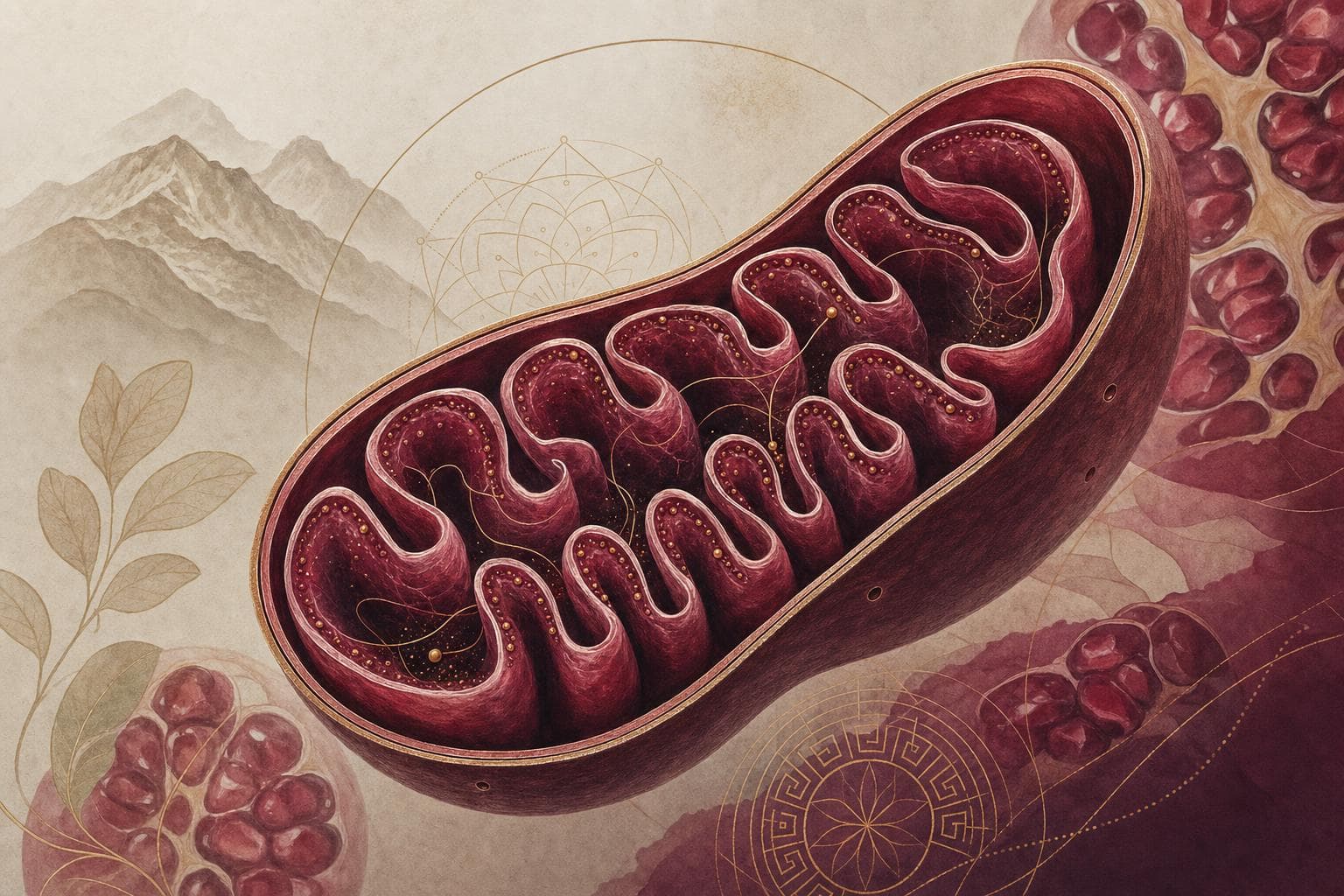
There is a puzzle at the heart of how Akkermansia muciniphila is used. The form studied in humans, and the form authorised in Europe, is pasteurised: heat-treated, non-living cells. How can dead bacteria do anything at all? The answer comes down to a single protein with an unglamorous name, Amuc_1100, and to where on the cell that protein sits.
A protein on the surface
Akkermansia is wrapped in an outer membrane, and studded into that membrane are proteins that face the outside world, the parts of the bacterium that physically touch the cells of your gut lining. Amuc_1100 is one of those outer-membrane proteins. The bacterium does not secrete it or manufacture it on demand; it is a structural fixture of the cell surface, present whether the cell is alive or not.
That last detail is the key to everything that follows. A surface protein does not need a living, metabolising cell to do its job. If the job is to make contact with the gut lining and trigger a response, then the requirement is that the protein is present and correctly shaped. Whether the bacterium around it is still alive is a separate question.
The 2017 experiment
In 2017, Hubert Plovier and colleagues set out to find what, specifically, inside Akkermansia was responsible for its metabolic effects. Working in obese and diabetic mice, they ran the kind of clean, dissecting experiment that makes a mechanism convincing (Plovier et al., 2017).
Two findings stood out. The pasteurised bacterium worked at least as well as the live one: heat-killing the cells did not abolish the benefit, and in places improved it. And when the team isolated Amuc_1100 and gave it on its own, with no bacterium at all, just the purified protein, it reproduced much of the metabolic improvement. A single component, stripped out of the cell entirely, carried a large share of the effect the whole organism gets credit for.
The benefit had narrowed from "this bacterium" to "this protein on this bacterium's surface."
Why this solves the pasteurised paradox
If the active component is a heat-stable structural protein on the cell surface, pasteurisation costs you very little. It leaves Amuc_1100 sitting on the surface, intact and able to make contact, while removing the unpredictability of administering a living microbe. The pasteurised-paradox story is covered in full elsewhere; Amuc_1100 is the molecular reason it works.
This also explains why preservation matters so much for us. If the value lives in a surface protein, the whole point of processing is to keep that protein intact and correctly folded, which is what gentle freeze-drying is good at. That is the reasoning behind the pasteurised, freeze-dried Akkermansia in Vekovia · Bilberry.
The human follow-on, and the honest edge
The Amuc_1100 work is mouse research, and we label it as such. But the story did not stop in mice. The first human trial, in 32 overweight, insulin-resistant adults, found the pasteurised form safe and showing the clearest metabolic improvements of the groups studied (Depommier et al., 2019). The lab's prediction held up when it reached people.
That trial was small and exploratory, the protein-specific mechanism is still mostly animal-derived, and we don't turn any of that into a product claim. What it gives us is an unusually well-traced explanation of why the pasteurised form is the one studied and authorised.
In the next post, we follow the berry side of the formula and the polyphenol trail that connects it back to this same bacterium.
References
- Plovier H et al. A purified membrane protein from Akkermansia muciniphila or the pasteurized bacterium improves metabolism in obese and diabetic mice. Nat Med 2017. PMID 27892954. DOI · PubMed
- Depommier C et al. Supplementation with Akkermansia muciniphila in overweight and obese human volunteers: a proof-of-concept exploratory study. Nat Med 2019. PMID 31263284. DOI · PubMed